
Conversations about building retrofits start with a wish list of new products and technology. That might mean a full mechanical overhaul, a smarter control system, a new chiller, or any number of other system upgrades before anyone has asked a very basic question: What is working well within the building right now?
The answer to that question matters quite a bit and can dramatically shape a project. If the whole purpose of retrofit is maximizing existing building stock, that also goes for what’s inside of the buildings themselves.

UNEP's 2024 Global Status Report for Buildings and Construction states that buildings account for one-fifth of global greenhouse gas emissions, are responsible for 34 percent of global energy demand and 37 percent of energy and process-related CO2 emissions. HVAC represents a significant amount—approximately 40 percent—of that total load.
Even with the steady pace of new construction, most operating commercial buildings are decades old and will remain in use for 50 to 100 years. No matter how efficient new construction gets, it won’t dramatically shift the equation. The retrofit of the existing building stock is where the real work and the real opportunity live.
Increasingly that work is being driven by more than good intentions. Many cities across the country now have climate action plans, and a growing number are attaching real financial consequences to energy performance. That includes public scorecards, penalties, or both. What was once a sustainability conversation is quickly becoming a risk-management one. Building owners aren't just weighing carbon anymore. They're weighing exposure.
Optimize Before You Replace
Faced with pressure to perform, the instinct very often is to reach for the biggest, most visible fix. Design teams will look to rip out the old equipment and install the newest technology. But the data tells a different story. There is a wide spectrum of solutions available to owners and operators.
Most commercial buildings already have some form of a building automation system in place. The sensors, controllers, and software to run a building intelligently already exist in most properties, but in many cases, there is a great deal of unrealized potential.
Automation is designed to flag problems as they happen. A sensor detects something that is off specification and triggers an alert so someone can act. In theory, that's a clean, self-correcting system. In practice, it tends to break down under its own noise. A building with dozens of interdependent mechanical systems generates alarms constantly and the majority of them don't mean anything is actually wrong. They are just ordinary variations in a complex system. Faced with hundreds of alerts each day and no easy way to tell the urgent ones from the trivial ones, facility teams do the practical thing anyone would do. They silence the alarms or take the system out of automated mode and run it manually.
That becomes the default and month by month, a building that was designed to run on an optimized, automated sequence quietly drifts back toward manual patchwork. Someone adjusting a setpoint here, overrides a schedule there, and reacts to comfort complaints as they come in rather than managing the system. The sensors are still mounted, and the data is still technically being generated. But now almost nobody is confident it's accurate, complete, or actually pointing at what matters. The gap isn’t a lack of technology, but a slow erosion of trust in the technology already installed.
This represents an overlooked opportunity. Before a major purchase and installation of new systems gets made, there may be enormous value sitting in the gap between what a building's systems can measure and what is being done with that information.
A great example is a large building in Chicago that was built in the 1890's and served primarily as retail until it was substantially renovated in an adaptive reuse to offices in 2020. The renovation included modern high-performance HVAC equipment and systems and earned a sustainability certification.
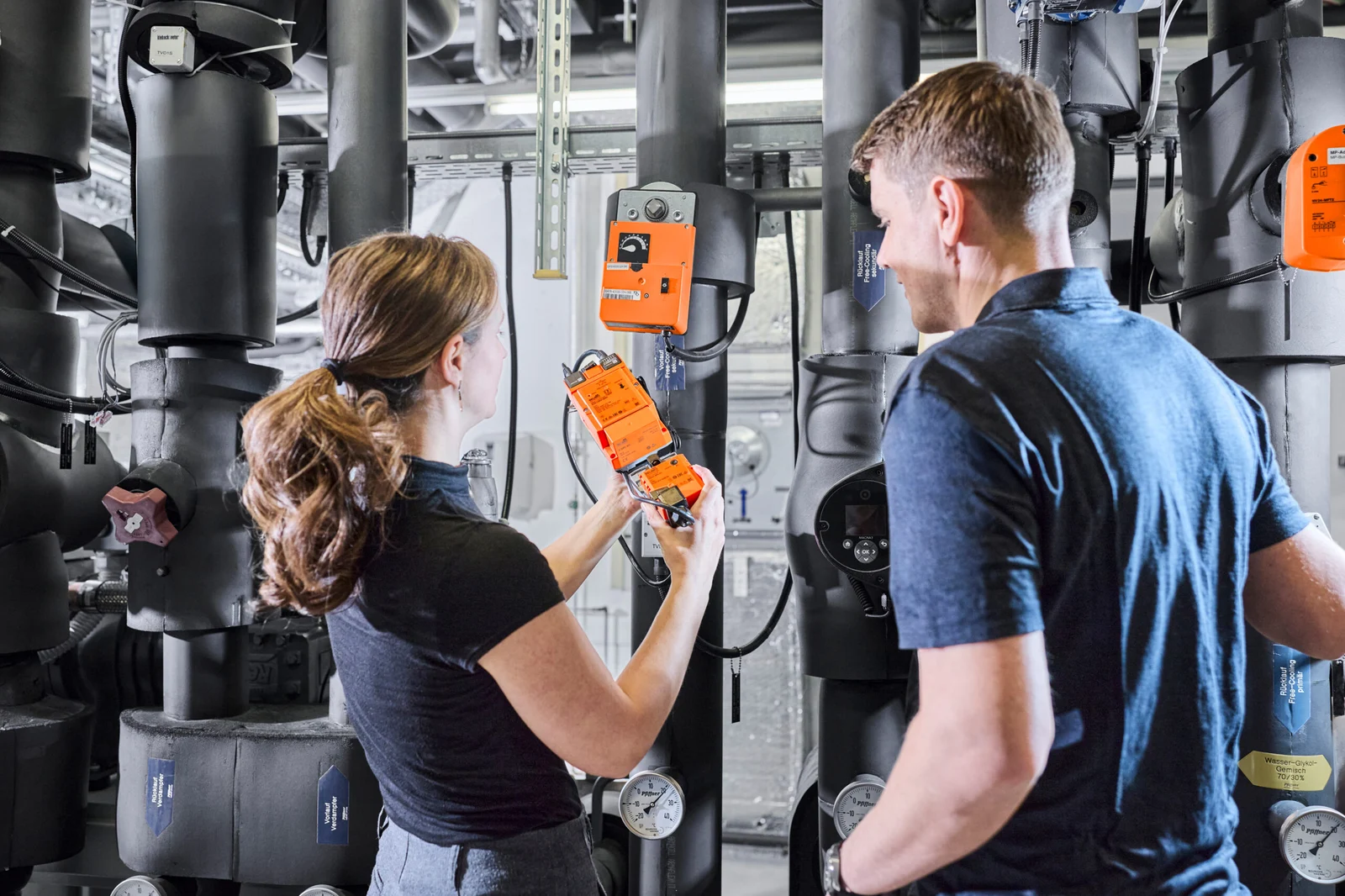
“The building was operating after the renovation believing that the high-performance systems were performing at top performance,” says Benjamin Skelton, president of Cyclone Energy Group. “After an evaluation of performance several measures were found, but tuning of the Energy Valves on the HVAC systems proved to be a massive ongoing energy cost saver for the property."
Rethinking the Payback Period

The default financial lens for most building improvements is simple payback period. How fast does this investment pay for itself? It's an easy number to explain to an owner or executive team, but it's not an ideal way to represent what is actually happening. Simple payback treats every project in isolation and doesn't account for compounding operational savings, the cascading effects of fixing what's broken elsewhere in a system, or the fact that a building's mechanical performance rarely improves or degrades in a straight line.
A more useful framework treats building performance the way a long-term investor treats a portfolio. Things like total carbon footprint, energy-intensity benchmarks, and risk exposure are measured building by building, with clear targets for where each asset needs to land. That shift in thinking from "will this one project pay for itself" to "how do we compound improvement across the portfolio" is what separates owners who are gaining ground from owners who are falling behind.
And the gap between those two groups is widening. Owners who treat efficiency as an ongoing discipline are reinvesting the cash flow from early wins into the next round of upgrades, building momentum year over year. Owners who treat it as a box to check are stuck in an endless cycle of deferred maintenance, patching what breaks, replacing like-for-like, and falling further behind the buildings that started compounding years earlier.
None of this is to say that major capital upgrades aren’t sometimes needed. Chillers age out, envelopes fail, and old fossil-fuel-based systems eventually need to go. But the sequence matters. Building owners/managers that understand their building's own performance data, where the losses are, which systems are compensating for others, and what's truly driving energy use, make smarter, better-targeted capital decisions when the bigger investments come due. They also generate the operating cash flow to help fund those investments, rather than starting from zero.
Today’s existing building stock isn't going anywhere, and the systems already installed in most commercial properties represent an underused asset. The fastest, least invasive, and often highest return move available to most owners isn't the next big purchase. It's finally listening to what the building has been trying to tell them all along.